World Wide Panic Series #4 Personal Construct Therapy
- Mar 15
- 3 min read
Updated: Apr 12
Weekly series exploring different therapeutic approaches, patterns and frameworks to unlock understanding and transformation of human mind ranging from the scientifically evidenced to the downright controversial ones.
Why do we keep repeating the same patterns even when we know better? Thinkers across different cultures and history have developed their own answers to this question. Today we explore Personal Construct Therapy approach.
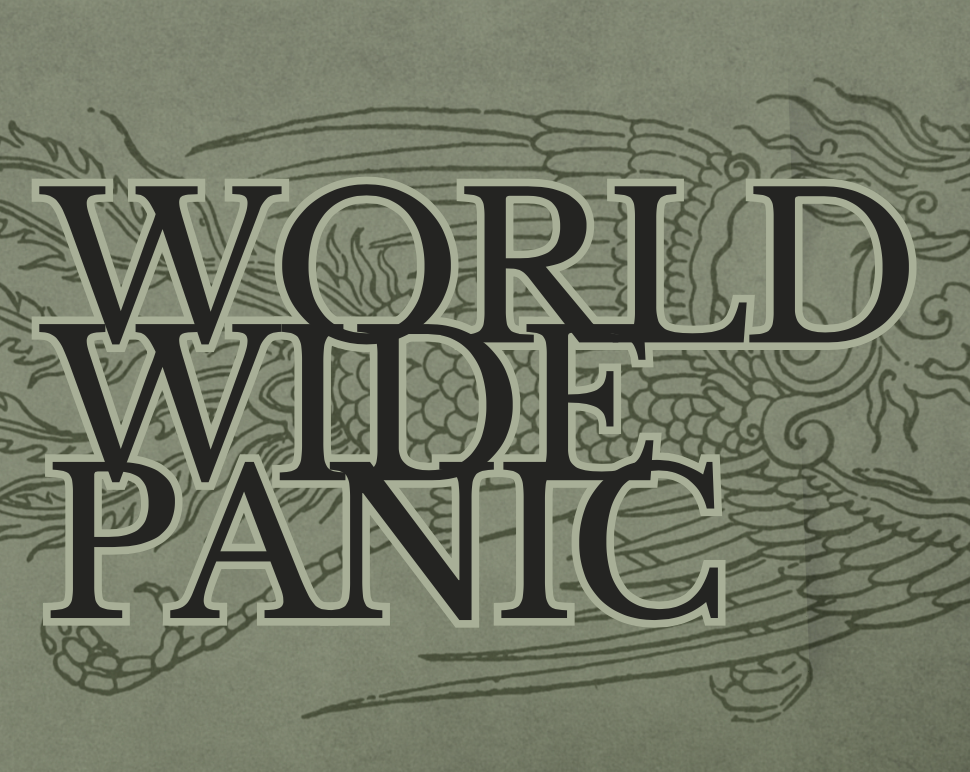
Image: Chinese Ornament: mythological creature Fong-Huang. The encyclopaedia of patterns and motifs: A collection of 5000 designs from cultures around the world. Studio Editions
Temperature: warm and exploratory
Therapist’s Role: the meaning philosopher
Dimension: internal (personal meaning systems)
Conceptualisation Model: individuals act as ‘personal scientists’ using mental constructs to interpret and predict the world
Patterns & Narrative: distress arises when rigid or limited personal constructs fail to explain experience
The Goal: expanding and revising personal constructs to create more flexible ways of seeing self and others
Big Picture / The Reward: increased psychological flexibility, identity clarity and adaptive meaning-making
Scientific Evidence: 5-6/10 (moderate research base, influential in constructivist therapies)
Era: 1950s
Ideal patient: people interested in identity and meaning
Personal Construct Therapy (PCT) is a psychotherapeutic approach derived from George Kelly’s theory of personal constructs first introduced in his work The Psychology of Personal Constructs (1955). Kelly proposed that individuals function much like ‘personal scientists’ continuously developing hypotheses about the world in order to predict and make sense of their experiences. These hypotheses take the form of personal constructs which are mental frameworks that organise perceptions, relationships and expectations.
According to PCT people interpret reality through systems of bipolar constructs (for example trustworthy-untrustworthy or independent-dependent). These constructs guide perception, shape emotional reactions and influence behaviour. Psychological distress can arise when a person’s construct system becomes rigid, narrow or unable to accommodate new experiences or when events contradict existing constructs, individuals may experience confusion, anxiety or threat as their predictive system fails to make sense of the situation.
PCT shares some conceptual ideas with Cognitive Behavioural Therapy which also emphasises the influence of interpretations and beliefs on emotional experience but it differs in its stronger focus on personal meaning systems and identity narratives rather than on correcting ‘distorted’ thinking. The therapist seeks to understand how a client’s constructs developed and how they help the person anticipate and participate in the world.
In therapy the main goal is the exploration and organisation of experiences and finding where those frameworks may be limiting. One well known technique within PCT is the repertory grid - a structured method for mapping how clients perceive important people, events or roles in their lives across different constructs. By examining patterns within these grids, therapist and client can identify rigid assumptions, hidden themes or contradictions within the client’s belief system.
Similar as in one of my previous posts talking about Psychodrama clients may experiment with alternative ways of behaving and interpreting situations by trying on a new role or perspective, individuals can test different constructs in real-world contexts and observe how new interpretations affect their relationships and emotional responses. In PCT role experimentation is primarily a cognitive experiment designed to test and revise the client’s underlying belief system or constructs whilst in Psychodrama role-playing is a dramatic and emotionally expressive enactment which is often performed in a group setting to access feelings, relational dynamics and spontaneous insight through action. This experimental idea reflects Kelly’s view that psychological change often occurs when people revise their personal theories about themselves and the world.
Research on PCT suggests it can be particularly useful in areas such as identity development, interpersonal difficulties and meaning-focused psychotherapy. Studies have found that construct-based assessments like the repertory grid can provide valuable insights into self-concept, social perception and personality organisation. However the empirical base is limited partly because PCT interventions are highly individualised and difficult to evaluate through traditional clinical trials. Despite this PCT remains influential within constructivist and narrative approaches to psychotherapy. Its emphasis on subjective meaning, personal identity and the evolving nature of belief systems anticipated many themes that later appeared in therapies such as Narrative Therapy and Constructivist Psychotherapy.
Personal Construct Therapy can therefore be understood as a method for reauthoring the mental frameworks through which life is interpreted. By exploring how individuals construct their realities and by experimenting with alternative ways of seeing clients gain the freedom to develop richer more flexible perspectives on themselves and others this way opening up a new set of possibilities available to them.
References
Kelly, G. A. (1955). The psychology of personal constructs (Vols. 1–2). New York, NY: W. W. Norton & Company.


Comments