Milk - Milk - Milk: The Mirror and the Medicine
- Nov 10, 2025
- 7 min read
Updated: May 20

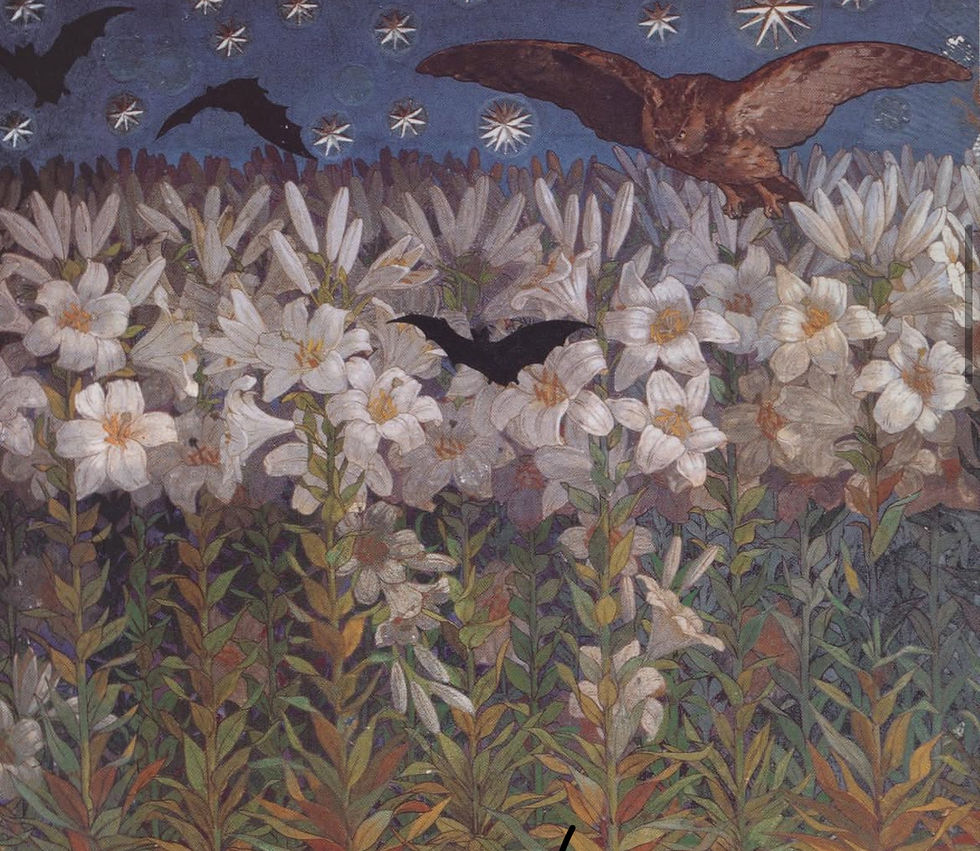
Image: Jan Lebenstein, ‘Came Plat II (Martwa Cisza II)’, 1970
Milk Milk Milk is a cognitive diffusion exercise asking to repeat word ‘milk’ out loud over and over again whilst thinking of the qualities associated with the word which eventually lose all associations and become meaningless. This being a famous intervention in Acceptance and Commitment Therapy (ACT) which is performed by reducing threatening stimulus using the repetition of one single word. This powerful exercise reveals that language, thought and meaning are fluid and that focused awareness on a single idea can initiate profound change.
Across the vast range of alternative and holistic therapies from Ayurveda, Traditional Chinese Medicine (TCM) and naturopathy to homeopathy, massage, acupuncture, Reiki, hypnotherapy, guided imagery, expressive arts, yoga and meditation an profound idea emerges - we are our own best healers. These methods may look different on the surface but they share a foundational belief that external tools whether herbs, hands, needles or sound are catalysts. Healing happens from within - Ayurveda and TCM seek to restore balance in the body’s ecosystem, mind-body methods like meditation and breathwork tap into the nervous system’s self-regulating power, somatic therapies stimulate the body’s innate repair mechanisms and energy work is about clearing blocked flow so your own life‑force can thrive. In each of these the practitioner whether herbalist, acupuncturist or massage therapist is guiding you back to your innate wholeness. Despite their surface differences each of these approaches ultimately empowers the individual to awaken the innate intelligence of their body, mind and spirit.
Ayurveda and Traditional Chinese Medicine do not seek to ‘fight’ illness but instead restore natural balance aligning your inner ecosystem with the outer world. Naturopathy works with the body’s natural ability to regenerate using lifestyle, nutrition and herbs to support that process. And homeopathy is based on the idea that the body can respond to the ‘memory’ of a stimulus and heal itself when gently nudged.
Mind-body practices like meditation, yoga and breathwork teach that calming the mind and regulating the nervous system unlocks powerful healing responses - showing that presence, awareness and breath can be more therapeutic than external interventions. Expressive art therapies like dance, music, drama heal by giving your emotions a voice and letting your subconscious participate in the healing process. Similarly, hypnotherapy and guided imagery help the deeper self-rewire. Even in hands-on therapies like massage, chiropractic and reflexology the practitioner is stimulating your own body’s mechanisms to repair and realign. In energy healing traditions like Reiki, Qi Gong and Pranic healing illness is seen as a blockage of vital energy and healing comes from the restoration of that inner flow. The healer is a facilitator of reconnection.
Of course these therapies exist on a spectrum of scientific credibility. Some such as meditation, acupuncture, massage therapy and certain dietary interventions have growing research supporting their effectiveness for conditions like stress, chronic pain and anxiety. Others including energy healing and homeopathy are far more controversial with limited or no consistent scientific validation. Still, their value lies in personal experience and the sense of empowerment they provide. No matter the modality the deeper you go into these systems the louder the message becomes - the transformation is internal.
The idea that we are our own best healers echoed across countless alternative therapies also resonates with insights from quantum physics and Eastern philosophy. At first science and spirituality seem worlds apart yet both have arrived at a profound common truth - the observer is not separate from what is observed and change begins from within. And an idea uniting both of these seemingly very different disciplines is oneness. At a deeper philosophical level, the observer effect in quantum physics - whereby particles exist in uncertain states until observed - suggests that consciousness participates in shaping reality (Zohar & Marshall, 1990). In quantum physics particles exist in a state of potential until observed what’s known as the observer effect which suggests that consciousness shapes reality.
This mirrors the essence of Eastern philosophy, particularly Buddhism, Taoism and Vedanta which propose that suffering arises from disconnection - from self, from nature, from presence. Healing therefore is about returning to the present moment, to harmony and alignment with a deeper self. The external method matters less than the moment you observe, intend, release a belief or direct attention inwards and witness your own healing emerging.
Modern science reinforces this ancient truth - your awareness and intention shape healing. Hundreds of controlled trials, meta‑analyses and neuroimaging studies demonstrate that mindfulness‑based interventions (MBIs) including Mindfulness‑Based Stress Reduction (MBSR) and Mindfulness‑Based Cognitive Therapy (MBCT), can reduce stress, anxiety, depression and chronic pain whilst promoting resilience, immune function and neuroplastic change (Kabat-Zinn, 1990; Segal, Williams, & Teasdale, 2002). For example, meditation training has been shown to deactivate pain-processing regions in the brain such as the anterior cingulate cortex, insula and thalamus (Zeidan et al., 2015).
When viewed through this lens all alternative healing modalities, whether it is rebalancing energy in Reiki, calming the nervous system through breathwork or releasing trauma through movement are simply different languages describing the same principle - awareness is the medicine. So whilst acupuncture and sound baths may look nothing alike and meditation may seem unrelated to herbal medicine they are all paths leading back to the same realisation that healing begins the moment we recognise our own power to transform.
In recent years a growing number of conditions once considered purely physiological are now recognised as having significant psychosomatic components. Clinical research demonstrates that stress, anxiety and emotional distress can directly exacerbate or even initiate symptoms in organs such as the heart, gut, skin and muscles - categories now referred to as ‘psychophysiological disorders’. Also advances in diagnostics reveal that mental and emotional states influence measurable changes in brain, immune and endocrine function (Chauhan et al, 2024). Even more serious illnesses like hypertension, asthma and irritable bowel syndrome are now understood to be influenced by psychological factors. Whilst terminology has shifted from ‘psychosomatic’ to ‘psychophysiologic’ or ‘somatic symptom’ - the core realisation remains - almost all physical illnesses contain a mental-emotional dimension (MacLean, 1949; Engel, 1977). This evolving perspective suggests that true healing requires addressing both the body and the mind.
Psychedelics are rapidly emerging as powerful tools in the science of self-healing. Recent clinical trials and meta-analyses show that psilocybin-assisted therapy can lead to substantial, rapid and long-lasting reductions in depressive symptoms. A meta-analysis by Fang et al. (2024) reported a large effect size (Hedges’ g = -0.89), suggesting psilocybin’s antidepressant impact exceeds that of many conventional treatments with benefits sustained for up to several months post-treatment. In a landmark phase IIb study by COMPASS Pathways a single 25 mg dose of psilocybin combined with psychological support significantly outperformed a 1 mg control in patients with treatment-resistant depression with a median time to relapse of 189 days (Khanna et al., 2022). Another randomised controlled trial compared psilocybin to the SSRI escitalopram finding that whilst both improved depression scores, psilocybin produced greater improvements in wellbeing, emotional responsiveness and connectedness (Carhart-Harris et al., 2021). New developments such as fast-acting psychedelic compounds like 5-MeO-DMT are also showing promise producing rapid symptom relief in early-stage depression trials (Morris, 2024).
Importantly, across all studies it is the integration process insight, reflection and intention that drives healing. Psychedelics appear to act as powerful mirrors allowing individuals to perceive their minds, pain and stories differently and healing is revealed and activated from within.
It is also fascinating to reflect on the placebo effect and suggestions often viewed merely as a control mechanism in clinical trials yet revealing something profound about the human mind. The fact that someone can experience real physical or psychological improvement after taking a completely inert substance suggests that our expectations, beliefs and perceptions alone can initiate healing. Whilst science uses the placebo to measure a treatment’s efficacy it also unintentionally demonstrates the remarkable power of the mind to influence the body. What does it say about us that belief even without biochemistry can spark genuine change?
I do believe that we should always look into scientific evidence and research first before attempting to understand any available treatment that is rejected by the mainstream science however keeping your mind and intuition open to exceptions is important too as more and more of the approaches not that long ago considered pseudoscience with the new research are being brought to life offering new insights and potential positive outcomes in treating different disorders. It is important to remember that science is not a complete discipline with only a few gaps needed to be filled in, it is a fairly young discipline which is ever growing and changing. Our scientific understanding constantly evolves through new evidence and revision from geocentrism and the flat earth theory to the belief that atoms were the smallest possible particles. More recently science has overturned ideas like ulcers being caused by stress, fat being inherently bad, the brain’s inability to regenerate neurons and the strict left-brain/right-brain personality myth. Even our gene count and understanding of healing from medication to practices like breathwork continue to be reshaped by new discoveries.
So, if you ever find yourself overwhelmed by the many healing methods available take a step back and remember this essential insight - beneath all these alternative approaches, many of which are dismissed by the mainstream scientific lens, lies one unifying truth - you hold the power to initiate healing from within. Intuition, intention and self-awareness are the key. In fact, this may be the most distilled ‘recipe’ of all. You can even create your own healing rituals or practices, unique to you, as long as they help you connect, shift or awaken something internally. And if trusting yourself feels unfamiliar or difficult right now there are countless structured approaches available to guide you. Sometimes the path begins with a framework until you are ready to follow your own.
References
Carhart-Harris, R. L., Giribaldi, B., Watts, R., Baker-Jones, M., Murphy-Beiner, A., Murphy, R., … & Nutt, D. J. (2021). Trial of psilocybin versus escitalopram for depression. New England Journal of Medicine, 384(15), 1402–1411. https://doi.org/10.1056/NEJMoa2032994
Chauhan, A., Kumar, V., & Shakya, A. (2024). Psychosomatic disorder: The current implications and challenges. Current Psychopharmacology, 13(2), 92–95. https://pubmed.ncbi.nlm.nih.gov/37873912/
Fang, B., Zhou, Y., Yang, S., Qiao, H., Liu, L., & Liu, Y. (2024). Efficacy and acceptability of psilocybin for depression: A systematic review and meta-analysis. Journal of Affective Disorders, 350, 153–161. https://doi.org/10.1016/j.jad.2023.12.071
Kabat-Zinn, J. (1990). Full Catastrophe Living: Using the Wisdom of Your Body and Mind to Face Stress, Pain, and Illness. Delacorte.
Khanna, R., McIntyre, R. S., De Boer, P., Goodwin, G. M., Rucker, J. J. H., & COMPASS Pathways Collaborators. (2022). Single-dose psilocybin for a treatment-resistant episode of major depression: A phase 2, double-blind, randomized, placebo-controlled trial. The New England Journal of Medicine, 387(18), 1637–1648. https://doi.org/10.1056/NEJMoa2206443
MacLean, P. D. (1949). Psychosomatic disease and the “visceral brain”; recent developments bearing on the Papez theory of emotion. Psychosomatic Medicine.
Morris, A. (2024, June 11). Psychedelic nasal spray shows promise against depression. Financial Times. https://www.ft.com/content/c9ad1f8a-64b4-4606-a863-5356c4929eed
Segal, Z. V., Williams, J. M. G., & Teasdale, J. D. (2002). Mindfulness-Based Cognitive Therapy for Depression: A New Approach to Preventing Relapse. Guilford Press.
Zeidan, F., Grant, J. A., Brown, C. A., McHaffie, J. G., & Coghill, R. C. (2015). Mindfulness meditation–related pain relief: Evidence for unique brain mechanisms in the regulation of pain. Neuroscience Letters, 520(2), 165–173. https://doi.org/10.1016/j.neulet.2012.06.013
Zohar, D., & Marshall, I. (1990). The Quantum Society: Mind, Physics and a New Social Vision. William Morrow.

Comments