The Mind Between Reason and Insight: Logic, Intuition and Universal Patterns
- Dec 24, 2025
- 5 min read
Updated: May 20

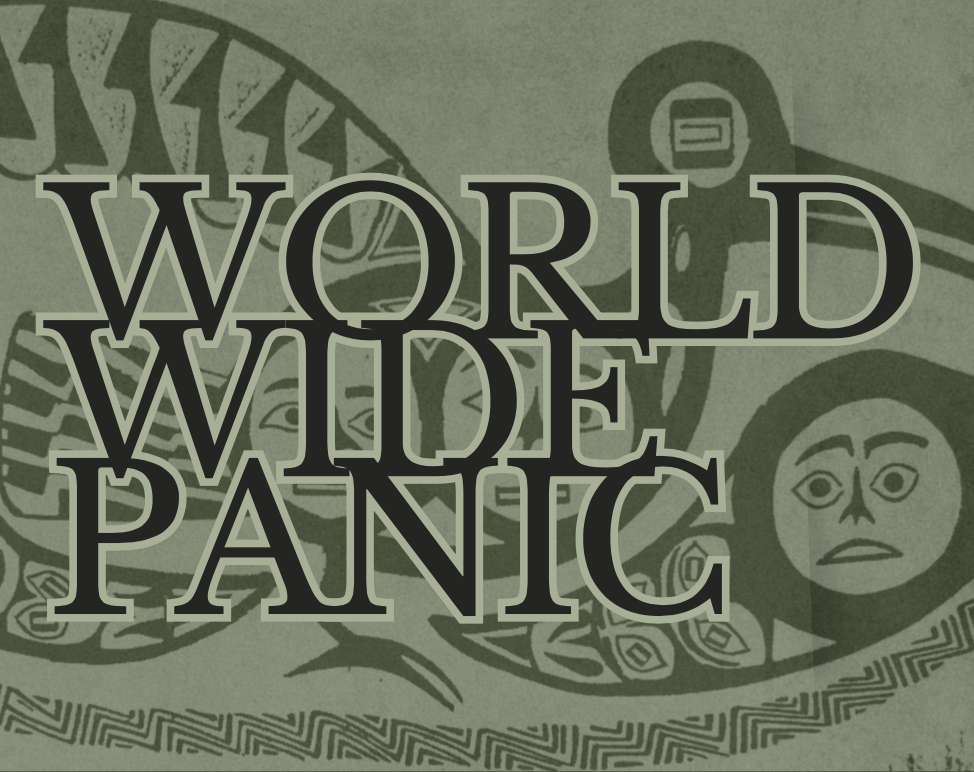
Picture: Animal Grotesques, mid 18th century, Punjab Hills
We tend to imagine thinking as a clean step-by-step logical process - we sit with a problem, reason through it and arrive at a solution. When an answer suddenly appears we call it intuition and often treat it as something separate, mysterious and irrational. Neuroscience suggests that logic and intuition are not the opposites and problem solving happens in a hybrid space between them (Kounios & Beeman, 2014).
In neuroscience logic is is a pattern of coordinated brain activity involving the prefrontal cortex maintaining goals and constraints, working memory holding intermediate representations, symbolic systems such as language and executive control mechanisms that suppress irrelevant options (Baddeley, 2012). Logic is the brain’s capacity to hold a problem steady, apply explicit rules, manipulate representations step by step and monitor for errors. This form of thinking is slow, effortful and limited by working memory capacity. When we actively try to solve a problem the process is never a clean chain of reasoning. First the problem is framed then certain elements are selected as relevant, others are ignored and constraints are defined. This step determines what kind of solution is even possible. Once framed, the conscious mind holds these constraints in place. We keep track of what must be satisfied, what approaches have failed and what directions are forbidden. This is where conscious logic is most visible but it is not yet producing solutions…
Whilst conscious attention maintains these constraints, large-scale unconscious processing begins. The brain explores many possibilities in parallel, combining past experiences, testing patterns and simulating outcomes (Kounios & Beeman, 2014). This activity is inaccessible to introspection. Subjectively it feels like effort, confusion or waiting, objectively it is active computation occurring outside awareness. At some point a configuration emerges that fits the constraints well enough and then it appears in consciousness as a sudden idea or a solution that feels complete but the steps that led to it remain hidden. Once a candidate solution appears, conscious logic returns - the idea is evaluated, tested and justified. We check whether it actually works, whether it can be explained and where it might fail. Because this is the part we can observe and verbalise we often mistake it for the entire thinking process even though it represents only the final stage of it. From the inside it seems as though logic reaches its limits and something else takes over. From a neuroscience perspective logic has already done its part by structuring the problem. The continuation happens in a different format. Intuition is not a replacement for logic but its extension into non-verbal processing. Intuition is best understood as implicit inference - it operates through pattern recognition, probabilistic weighting, emotional and abstract model matching. It does not follow explicit rules or produce intermediate steps that can be inspected - it delivers conclusions directly (Gigerenzer, 2007). This makes intuition feel fast, certain and difficult to explain. It is just logic without language.
We tend to overestimate how much logic we use because logical thinking is effortful and verbal. Effort creates the impression of centrality. In reality conscious logic mainly frames problems, applies constraints and evaluates outcomes. Most of the computational work is done by systems that operate outside awareness. Logic and intuition are therefore not in conflict - logic determines what counts as a solution and intuition searches the space of possibilities. Logic then returns to verify and communicate the result. Active problem-solving is less about building solutions step by step and more about holding the right constraints for the right solution to become visible.
In Jungian psychology intuition is a distinct mode of perception. Jung defined intuition as the unconscious apprehension of possibilities, patterns and meanings that are not immediately given in sensory data. Whilst sensation perceives what is present, intuition perceives what is emerging and it operates by bringing unconscious material into awareness in a condensed form often as a sudden insight so intuition feels immediate and difficult to explain not because its underlying process remains inaccessible to conscious inspection. In Jung’s model intuition draws not only on individually learned unconscious contents but also on what he called the collective unconscious (Jung, 1959). This refers to inherited psychological structures that organise experience in recurring, symbolic forms rather than to personal memories or acquired knowledge. Through intuition these deeper patterns can surface as images, themes or insights that feel impersonal, universal or meaningful. Because these contents are not traceable to individual learning or conscious reasoning, intuitive insights can feel as though they arrive from outside the self - Jung understood them as expressions of shared psychic structures.
Logic plays a far smaller role in our lives than we often assume. Even in deliberate problem-solving logic is often confined to framing the problem, holding constraints and evaluating outcomes whilst generating solutions happens largely through intuitive processes. Much of what guides our decisions, judgments and insights arises without conscious reasoning and only afterwards it is translated into logical explanations. Sometimes the sources of these intuitions can feel very mysterious…
In recent psychedelic research some researchers have revisited ideas that strongly resemble Jung’s concept of the collective unconscious. Reports from psychedelic states frequently include encounters with archetypal imagery, mythic narratives and symbolic structures that appear strikingly similar across individuals, cultures and historical universal patterns even when participants have no conscious familiarity with them (Grof, 1980; Carhart-Harris et al., 2014). This has led some scholars to argue that these experiences point to shared underlying structures of the mind rather than purely personal memory or learning. Whilst mainstream neuroscience typically explains this convergence in terms of common brain architecture and universal cognitive constraints, others suggest that the consistency and depth of these experiences lend empirical weight to the idea that certain symbolic patterns are collectively inherited rather than individually acquired.
Which brings us to another angle on some ancient mystical ideas. Across cultures and historical periods, mystics have described experiences of universal patterns, archetypal visions or a sense of connectedness that transcends personal identity (James, 1902). These concepts resonate with both Jung’s collective unconscious and reports from psychedelic research. These descriptions suggest that what was once framed as purely spiritual or mystical may reflect the brain’s capacity to access deep shared structures of meaning. Whilst the language and interpretation differ, the underlying phenomenon - a direct encounter with patterns that feel larger than the individual self - appears consistent across both mystical traditions and modern research.
Perhaps much of our conscious effort and focus is spent on the wrong things - on linear logic, narrow problem-solving or the surface details of life whilst overlooking the deeper currents that connect us to one another and to the world. The interplay of logic, intuition and the layers of unconscious and possibly collective structures remind us that experience is far richer and more interconnected than we often acknowledge - these patterns hint at a unity and cyclical movement underlying reality suggesting that understanding and meaning emerge not only from what we reason through but also from what we perceive, sense and receive from the deeper layers of existence.
References
Baddeley, A. (2012). Working memory: Theories, models, and controversies. Annual Review of Psychology, 63, 1–29. https://doi.org/10.1146/annurev-psych-120710-100422
Carhart-Harris, R. L., Leech, R., Hellyer, P. J., Shanahan, M., Feilding, A., Tagliazucchi, E., Chialvo, D. R., & Nutt, D. J. (2014). The entropic brain: A theory of conscious states informed by neuroimaging research with psychedelic drugs. Frontiers in Human Neuroscience, 8, Article 20. https://doi.org/10.3389/fnhum.2014.00020
Gigerenzer, G. (2007). Gut feelings: The intelligence of the unconscious. Viking.
Grof, S. (1980). LSD psychotherapy. Hunter House.
James, W. (1902). The varieties of religious experience: A study in human nature. Longmans, Green & Co.
Jung, C. G. (1959). The archetypes and the collective unconscious (R. F. C. Hull, Trans.). Princeton University Press.
Kounios, J., & Beeman, M. (2014). The cognitive neuroscience of insight. Annual Review of Psychology, 65, 71–93. https://doi.org/10.1146/annurev-psych-010213-115154


Comments